Space Force Adds $985M Ceiling to Launch Contracts With SpaceX, ULA, Blue Origin
Three launch providers received contract modifications for National Security Space Launch Phase Three, Lane Two services.
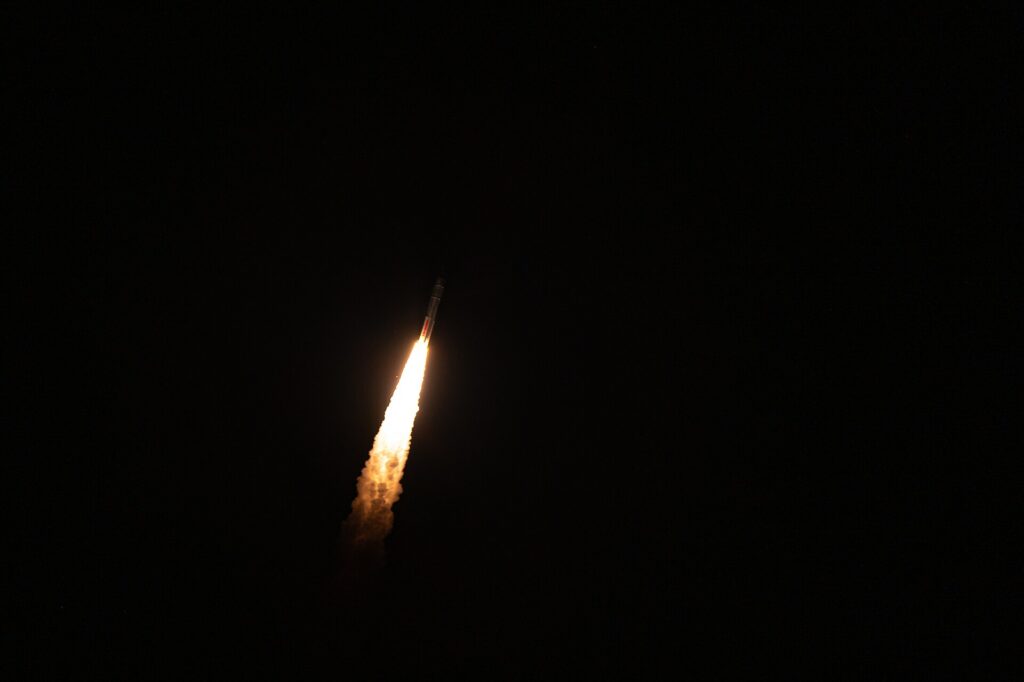
The US Space Force has awarded contract modifications with a combined maximum ceiling of $985 million to SpaceX, United Launch Services, and Blue Origin for national security launch services, according to the Department of War’s daily contract announcement for November 16.
The modifications cover launch services under Phase Three, Lane Two of the National Security Space Launch program. The announcement did not break the ceiling down by company. The recipients are SpaceX of Hawthorne, California; United Launch Services of Centennial, Colorado; and Blue Origin of Merritt Island, Florida.
Work will take place at the contractors’ facilities and at Cape Canaveral Space Force Station and Kennedy Space Center in Florida and Vandenberg Space Force Base in California. It is expected to be completed by April 2033.
No funds were obligated at the time of award. Space Systems Command’s Space Access office at Los Angeles Air Force Base, California, is the contracting activity. The modifications apply to contracts FA8811-25-D-B002 (SpaceX, modification P00006), FA8811-25-D-B003 (United Launch Services, P00004), and FA8811-25-D-B005 (Blue Origin, P00006).
Lane Two is the part of the program reserved for the most critical national security payloads, including heavier satellites and missions to orbits that are harder to reach. Launches are bought through firm-fixed-price, indefinite-delivery contracts and ordered about two years before flight. SpaceX offers its Falcon 9 and Falcon Heavy rockets, United Launch Alliance its Vulcan, and Blue Origin its New Glenn.
Phase Three Awards
The Space Force selected the three companies for Lane Two in April 2025 under contracts worth a combined $13.7 billion. The service expected to order 54 missions over five years starting in fiscal 2025, with about 28 going to SpaceX, 19 to United Launch Alliance, and seven to Blue Origin, Spaceflight Now reported. The launches were projected to take place from fiscal 2027 to fiscal 2032.
The first seven task orders followed in October 2025 and totaled about $1.142 billion. SpaceX received five launches for $714 million and United Launch Alliance two for $428 million, according to Breaking Defense. The missions included a Wideband Global SATCOM satellite, a GPS IIIF satellite, and two National Reconnaissance Office payloads. Blue Origin received none because New Glenn had not yet completed the second flight required for certification to carry Lane Two payloads.
A separate Lane One covers missions that can accept more risk. The Space Force plans about 30 Lane One launches valued at $5.6 billion, with Rocket Lab and Stoke Space also eligible to compete, Air & Space Forces Magazine reported in October 2025.
The November 16 announcement did not say which missions the added ceiling will fund. Individual Lane Two missions are to be awarded in batches through fiscal 2029.

Do you sell to these buyers?
DefMatch is the Defense Capability Exchange from The Defense Post. Find your company profile, claim it, and get in front of the people placing these orders.