Northrop Grumman Gets $1.13B US Navy Option for Three E-130J Nuclear Command Test Aircraft
The options cover three system demonstration test articles and initial spares, with work running to January 2030.
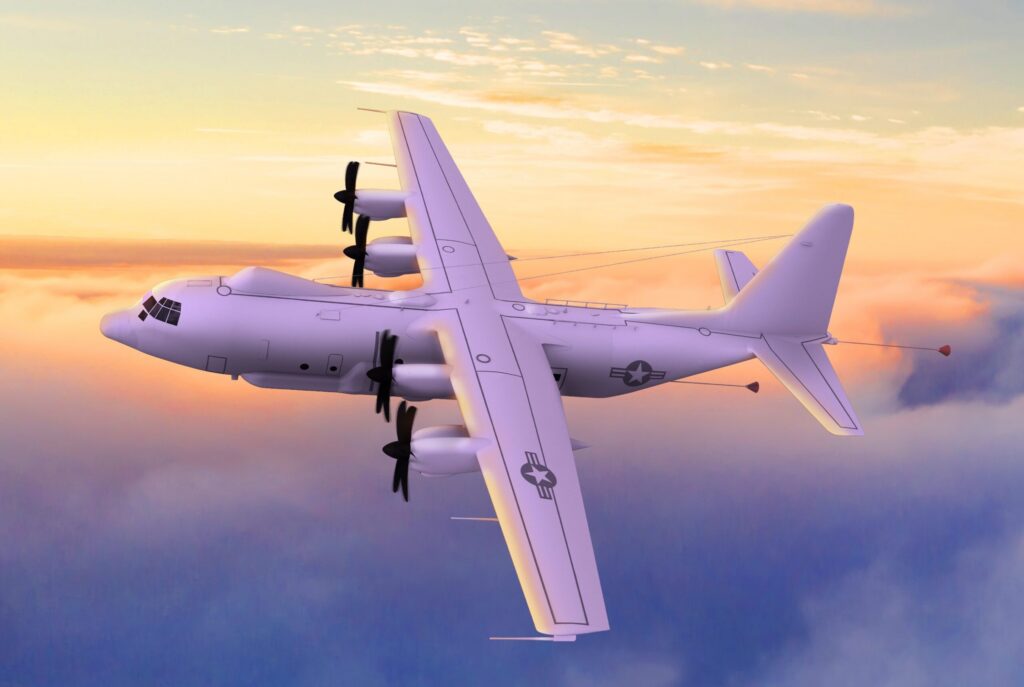
The US Navy has awarded Northrop Grumman about $1.13 billion to design, develop and deliver three E-130J test aircraft, according to the Department of War’s contract announcements for November 25, 2026.
The $1,130,397,498 award is a cost-plus-incentive-fee modification to a contract the Navy awarded earlier to Northrop Grumman Systems Corp. of Melbourne, Florida. It exercises options for three E-130J system demonstration test articles and initial spares, in support of the program’s engineering and manufacturing development phase.
Thirty-five percent of the work will be done in Melbourne, Florida, 23 percent in Marietta, Georgia, and 15 percent in Richardson, Texas. Largo, Florida, has 8 percent and Oklahoma City, Oklahoma, 6 percent. The rest is spread across sites in Florida, Indiana, Arizona, California and Texas and other locations in the continental United States. Work is expected to be completed in January 2030.
Only $4.18 million in fiscal 2027 research, development, test and evaluation funds was obligated at award. The announcement did not say when the rest will be funded. Naval Air Systems Command at Patuxent River, Maryland, is the contracting activity.
The E-130J program fits specialized, secure communications systems into C-130J-30 aircraft that the government supplies. The aircraft will take over the Navy’s Take Charge and Move Out mission, known as TACAMO, which keeps national leaders in contact with ballistic missile submarines when normal communications are disrupted.
Replacing the E-6B Mercury
The E-130J, named Phoenix II, will replace the Boeing E-6B Mercury, which is derived from the Boeing 707 and entered service in 1997. Northrop Grumman is the prime contractor and mission systems integrator. Lockheed Martin supplies the C-130J-30 airframe from its facility in Marietta, and Collins Aerospace supplies the very-low-frequency communications systems that reach submerged submarines.
Lockheed Martin delivered the first newly built C-130J-30 for conversion in October, The Defense Post reported. The program calls for 31 aircraft, six for development and 25 for production, according to a Pentagon acquisition report from July 2026 cited by The Defense Post.
Earlier awards on the program include a $225 million modification in March for Northrop Grumman to develop E-130J training systems and courseware. Northrop Grumman has also bought ThinKom satellite communications antennas for the aircraft.
Lockheed Martin said in April that the E-130J is planned to enter service in 2028. Work under the newly exercised options is expected to run until January 2030.

Do you sell to these buyers?
DefMatch is the Defense Capability Exchange from The Defense Post. Find your company profile, claim it, and get in front of the people placing these orders.